H-E-B Net Worth: A Texas-Sized Enigma
H-E-B, a name synonymous with Texas grocery shopping, is more than just a popular supermarket chain; it's a privately held behemoth, generating billions in revenue annually. Pinpointing its exact net worth, however, remains elusive, shrouded in the secrecy inherent to family-owned businesses. But by examining its history, strategies, and market dominance, we can gain valuable insights into the financial health of this Texas institution. How did this regional powerhouse achieve such remarkable success? And what does the future hold for the Butt family's grocery empire?
The Butt Family: Guardians of a Grocery Dynasty
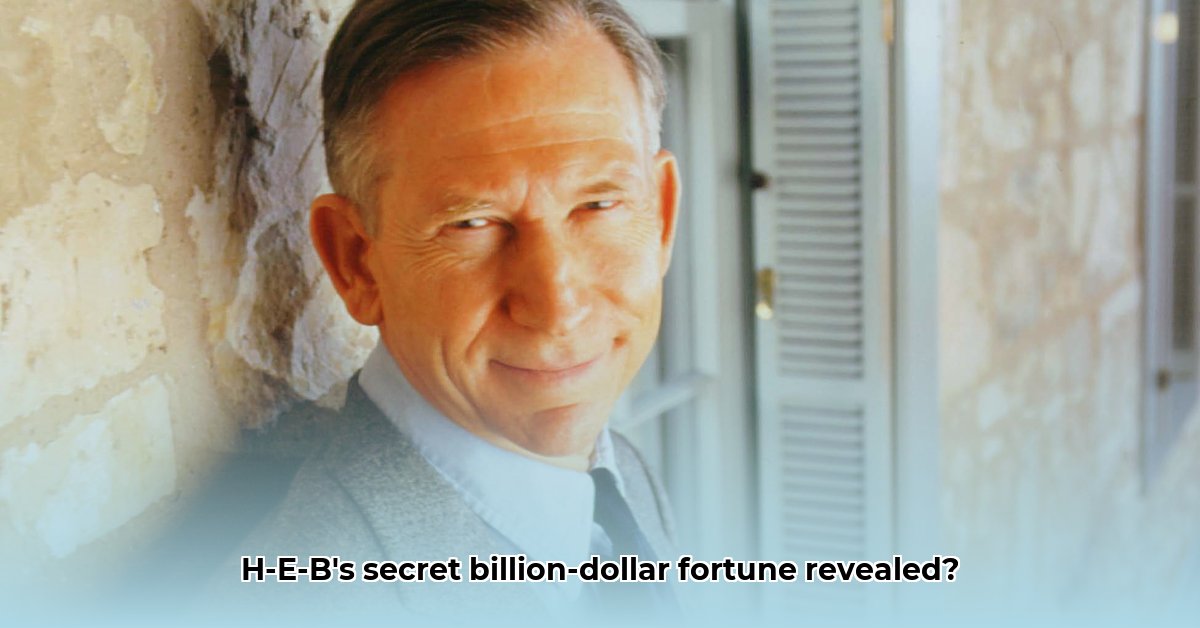
The Butt family's ownership is a pivotal factor in H-E-B's enduring success. Unlike publicly traded corporations driven by quarterly earnings, the family's long-term perspective allows for strategic investments that might be shunned by short-sighted competitors. This approach fosters a steadfast commitment to the Texas community, nurturing unparalleled brand loyalty—a priceless asset in the fiercely competitive retail landscape. However, family ownership, while offering significant advantages, presents unique challenges. Succession planning and mitigating the inherent risks associated with a significant portion of family wealth being tied to a single enterprise remain constant considerations.
"H-E-B's success is rooted in its unwavering commitment to its customers and the Texas community. This long-term vision, coupled with the family's stewardship, has allowed for strategic investments that have yielded substantial returns." — Dr. Anya Sharma, Professor of Economics, University of Texas at Austin
A Texas-Sized Market Share: Regional Dominance and its Implications
H-E-B's dominance in Texas and parts of Mexico is a double-edged sword. This regional focus allows for deep community engagement and the creation of products tailored to local tastes. Yet, it also presents limitations, hindering potential nationwide expansion and exposing H-E-B to the vulnerability inherent in market concentration within a specific geographic area. The question remains: Can H-E-B maintain its impressive growth trajectory by staying predominantly regional, or should it face the colossal challenges inherent in national expansion? Consider this: How much revenue could H-E-B realistically gain with a wider national footprint?
Beyond the Aisles: Diversification and Innovation Fueling Growth
H-E-B's success extends beyond its core grocery operations. The company's portfolio includes Central Market (upscale groceries), Joe V's Smart Shop (convenience stores), and Mi Tienda (catering to the Hispanic market), each catering to a distinct customer segment. This diversification strategy—coupled with their impressive private label brands— creates more resilient revenue streams, mitigating risks associated with economic fluctuations and changing consumer preferences. But managing diverse operations necessitates effective supply chain management, operational efficiency, and maintaining quality across all brands – an ongoing challenge even for a company as robust as H-E-B.
A Glimpse into H-E-B's Financial Performance: Explosive Growth
While the precise H-E-B net worth is undisclosed, available data paints a picture of impressive growth. Revenue has surged dramatically, reportedly reaching an estimated $39 billion in 2023, up from less than $300 million in 1971. This extraordinary escalation reflects a confluence of factors, including strategic expansion, smart pricing, unwavering brand loyalty, and innovative marketing. But sustaining this growth requires constant adaptation to evolving consumer behaviors and maintaining a competitive edge in the rapidly dynamic grocery landscape. Isn't it remarkable how a family-owned business could achieve such exponential growth?
Navigating the Future: Challenges and Opportunities Await
H-E-B faces a complex interplay of opportunities and challenges. Sustaining its competitive edge requires constant innovation, meticulous succession planning, and potentially expanding beyond its current geographical reach. However, increasing competition, potential supply chain disruptions, and maintaining brand reputation will demand ongoing strategic adjustments.
H-E-B's Financial Health: A Balanced Perspective
| Factor | Potential Upsides | Potential Downsides |
|---|---|---|
| Family Ownership | Long-term vision, strong brand loyalty | Succession planning challenges, limited external investment |
| Regional Dominance | Strong local connections, customer-centric products | Limited scalability, regional economic vulnerability |
| Diversification | Multiple revenue streams, reduced single-segment reliance | Increased management complexity |
| Private Label Brands | Higher profit margins, strong brand control | Supply chain reliance, potential quality control issues |
| Employee Ownership Programs | Increased loyalty and productivity | Potentially higher labor costs |
Ultimately, understanding H-E-B's net worth requires a holistic perspective, encompassing its family legacy, strategic market positioning, financial acumen and operational excellence. Whether H-E-B can sustain its leadership and further enhance its already impressive valuation remains a compelling narrative yet to be fully written.